Green Millwork and Circular Supply Chains: Sustainability, EUDR Compliance, and the Production, Import, and Export of Kitchen and Bathroom Cabinets in Türkiye
1. Environmental Compliance as the New Currency of Global Cabinetry Trade Across international construction, architectural specification, and home-improvement retail, environmental governance has transitioned from a voluntary corporate pledge into a strict statutory barrier to market entry. Institutional real estate funds in London, Frankfurt, and New York, alongside European customs authorities, now evaluate architectural millwork based on embodied carbon, deforestation-free timber traceability, volatile organic compound (VOC) off-gassing, and circular recyclability.
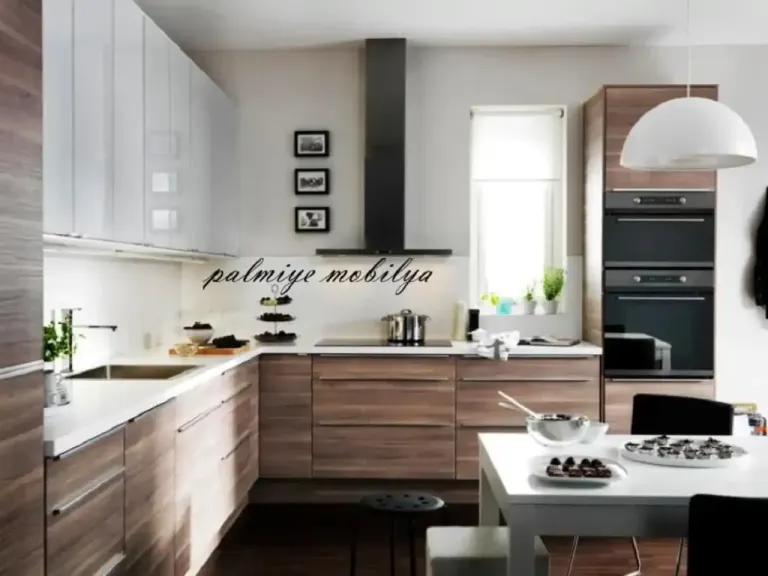
This regulatory transformation directly shapes the production, import, and export of kitchen and bathroom cabinets in Türkiye. Because the European Union and the United Kingdom represent Türkiye’s largest high-value export destinations—and because North American institutional developers enforce LEED v4.1 and WELL Building Standards—Turkish wood-panel producers and cabinet manufacturers have undergone a profound industrial modernization.
Analyzing the production, import, and export of kitchen and bathroom cabinets in Türkiye through the lens of green millwork and circular supply chains reveals how Turkish factories integrate EU Deforestation Regulation (EUDR) geolocation tracking, FSC/PEFC chain-of-custody systems, solvent-free UV/waterborne finishing lines, and industrial solar/biomass energy recovery to lead sustainable global cabinetry manufacturing.
2. Forestry Sovereignty and EU Deforestation Regulation (EUDR) Readiness
A decisive structural advantage supporting the production, import, and export of kitchen and bathroom cabinets in Türkiye is domestic raw-material traceability. Unlike assembly hubs that import unverified tropical veneers or mixed-origin fiberboards through opaque multi-tier brokers, Türkiye’s cabinetry ecosystem is anchored by integrated domestic wood-based panel giants (including Kastamonu Entegre, Yıldız Entegre, Çamsan, and Orma) operating alongside state-managed forestry networks.
Polygon Geolocation and Chain-of-Custody Traceability
Under the European Union Deforestation Regulation (EUDR), any operator placing wood-based furniture—including kitchen cabinets (HS 9403.40) and wooden bathroom vanities (HS 9403.60)—onto the EU single market must submit a Due Diligence Statement (DDS) proving that the timber was harvested legally and caused zero deforestation or forest degradation after December 31, 2020.
• Digital Harvest Mapping: Turkish panel mills and export-oriented cabinet manufacturers in İnegöl (Bursa), Kayseri, Ankara, Istanbul, and İzmir have implemented digital ERP traceability matrices linking finished board batch numbers directly to the GPS polygon coordinates of harvest parcels—both within state-regulated Turkish forests (managed by the General Directorate of Forestry / OGM) and certified European/North American timber suppliers.
• FSC and PEFC Dual Certification: Tier-one Turkish export factories maintain active FSC (Forest Stewardship Council) and PEFC (Programme for the Endorsement of Forest Certification) Chain-of-Custody (CoC) certificates, permitting international retail chains and green-building contractors to claim verified sustainable timber credits on commercial tenders.
Post-Consumer Recycled Wood Integration
To reduce virgin timber demand and lower cradle-to-gate embodied carbon, Türkiye’s major particleboard (Suntalam) manufacturers incorporate 30% to 50% post-industrial and post-consumer recycled wood fiber into standard cabinet carcass cores—utilizing optical sorting, eddy-current metal separation, and air-classification cleaning lines to ensure recycled chips meet strict EN 312 internal bond and screw-holding strength thresholds.
3. Low-VOC Chemistry, Formaldehyde Limits, and Indoor Air Quality (IAQ)
Modern airtight residential towers and passive-house developments require interior cabinetry that will not compromise indoor air quality (IAQ) through chemical off-gassing. Within the production, import, and export of kitchen and bathroom cabinets in Türkiye, chemical engineering standards are tightly aligned with the strictest European and North American health benchmarks.
Ultra-Low Formaldehyde Resin Systems (E0, CARB Phase 2, and NAF)
Standard urea-formaldehyde (UF) resins used in legacy particleboard and MDF emit formaldehyde over time. Export-grade Turkish cabinetry utilizes advanced resin formulations:
• E1 and E0 / Super-E0 Classifications: Turkish panel mills produce E1 (≤ 0.1 ppm) and E0 (≤ 0.05 ppm) boards compliant with EN 13986 and German ChemVerbotsV regulations.
• CARB Phase 2 & EPA TSCA Title VI: All composite wood substrates destined for North America carry Third-Party Certifier (TPC) stamps verifying strict adherence to California Air Resources Board (CARB) Phase 2 and U.S. EPA TSCA Title VI emission caps (≤ 0.05 ppm for hardwood plywood, ≤ 0.09 ppm for particleboard, ≤ 0.11 ppm for MDF).
• NAF (No-Added-Formaldehyde) & pMDI Boards: For healthcare facilities, schools, and LEED Platinum residential towers, Turkish manufacturers specify pMDI (polymeric methylene diphenyl diisocyanate) bonded MDF and particleboard, achieving near-zero biogenic formaldehyde emissions equivalent to natural solid wood.
Solvent-Free UV-Cured and Waterborne Finishing Lines
Traditional nitrocellulose and solvent-borne polyurethane cabinet lacquers release high levels of Volatile Organic Compounds (VOCs) during curing and installation. Leading Turkish cabinet factories have re-engineered their finishing departments around two clean technologies:
1. 100%-Solids UV-Cured Acrylic & Polyurethane Coatings: Applied via precision roller coaters and automated reciprocating spray robots, UV coatings cure instantaneously under mercury and gallium ultraviolet lamps—emitting virtually zero VOCs while producing an ultra-hard, scratch- and chemical-resistant surface (EN 12720 Class 1B).
2. Waterborne 2K Polyurethane Systems: Replacing aromatic hydrocarbon solvents with deionized water carriers, waterborne topcoats cut factory VOC emissions by 80% to 90% while delivering deep matte, satin, and high-gloss architectural aesthetics.
3. PVC-Free PET and Polypropylene (PP) Decorative Foils: Recognizing the global shift away from chlorinated plastics (PVC), Turkish membrane-press and lamination lines increasingly utilize recyclable PET (Polyethylene Terephthalate) and PP surface films paired with 100% Polyurethane (PUR) reactive zero-joint edge-banding.
Sustainability & IAQ Metric Legacy Conventional Millwork Export-Grade Turkish Green Cabinetry Governing Standard / Framework
Formaldehyde Emission Standard E2 (> 0.1 ppm) E0 / Super-E0 / CARB Phase 2 / NAF EN 13986 / EPA TSCA Title VI / LEED v4.1
Timber Origin Traceability Unverified bulk wood sourcing FSC / PEFC CoC + GPS Polygon Mapping EU Deforestation Regulation (EUDR)
Surface Coating Chemistry High-VOC solvent polyurethane 100%-Solids UV Acrylic / Waterborne 2K EU VOC Directive 2004/42/EC / WELL v2
Decorative Foil & Edge-Band Chlorinated PVC with EVA glue PVC-Free PET/PP Films + Zero-Joint PUR Cradle-to-Cradle / RoHS / REACH
Recycled Core Content 100% virgin roundwood 30%–50% Post-Consumer Recycled Wood EN 312 / ISO 14021 Environmental Claims
4. Circular Factory Operations: Energy Self-Sufficiency and Carbon Footprint Reduction
As the European Union phases in stricter carbon-accounting requirements under the European Green Deal, embodied carbon per cubic meter of shipped cabinetry has become a critical tender metric. The production, import, and export of kitchen and bathroom cabinets in Türkiye demonstrate how industrial clusters are decarbonizing manufacturing operations.
Closed-Loop Biomass Thermal Energy
CNC nesting, beam-saw cutting, and profile milling inevitably generate wood dust and panel offcuts. Rather than landfilling wood waste, modern Turkish cabinetry campuses operate centralized pneumatic extraction networks feeding high-efficiency closed-loop biomass boilers. Clean, untreated wood waste is converted into thermal energy that powers factory heating, veneer press platens, and lacquer drying ovens—eliminating natural gas consumption for process heat.
Industrial Rooftop Photovoltaic (PV) Solar Arrays
Benefiting from Türkiye’s high solar irradiance across Central Anatolia, Marmara, and the Aegean region, major cabinet manufacturers in Kayseri, İzmir, İnegöl, and Ankara have covered vast factory roofs with megawatt-scale photovoltaic solar panels. Many export facilities now generate 60% to 100% of their daytime electricity demand from on-site solar energy, significantly reducing Scope 2 greenhouse gas emissions and insulating production costs from grid electricity volatility.
Packaging Circularity and Plastic Elimination
To comply with the EU Packaging and Packaging Waste Regulation (PPWR) and UK Plastic Packaging Tax rules:
• 100% Recycled Corrugated Cartons: Export flat-pack boxes are custom-cut to the exact millimeter on automated packaging machines (eliminating void-fill waste) using FSC-certified recycled kraft linerboard printed with water-based soy inks.
• Molded Pulp & Honeycomb Board Replacement: Forward-thinking Turkish exporters are replacing expanded polystyrene (EPS) foam corner blocks with die-cut honeycomb cardboard buffers and molded paper pulp protectors, enabling retail consumers and construction contractors to recycle 100% of cabinet packaging in standard paper waste streams.
5. Dual-Direction Trade Dynamics: Sustainable Inputs and Eco-Certified Exports
Examining the production, import, and export of kitchen and bathroom cabinets in Türkiye highlights how green procurement governs both inbound component imports and outbound finished goods.
Inbound Sustainable Supply Chain
• European Eco-Engineered Hardware: Turkish manufacturers import long-lifespan motion hardware from Austria (Blum) and Germany (Hettich, Grass, Häfele)—brands certified under ISO 14001 and EMAS whose 80,000-to-100,000-cycle durability prevents premature cabinet disposal and landfill waste.
• Certified North American & European Hardwoods: Kiln-dried American White Oak, Hard Maple, and Black Walnut alongside European oak veneers are imported exclusively with FSC/PEFC and legal-harvest documentation, entering duty-free under Türkiye’s Inward Processing Regime (Dahilde İşleme Rejimi – DİR) when incorporated into exported cabinets.
• Low-Emission German & Italian Adhesives: Solvent-free reactive PUR hot-melts and waterborne dispersion glues are imported from European chemical leaders (Henkel, Kleiberit, Jowat) to ensure full EU REACH compliance (zero SVHC—Substances of Very High Concern).
Outbound Trade Corridors Driven by Green Procurement
1. European Union & United Kingdom: Duty-free entry under the EU-Turkey Customs Union (A.TR) and UK-Turkey FTA, combined with short 4-to-12-day road/short-sea transit routes, gives Turkish cabinetry a drastically lower transport carbon footprint than cabinetry shipped 18,000 kilometers via heavy fuel oil container vessels from East Asia.
2. United States & Canada: Institutional multi-family developers pursuing LEED, Enterprise Green Communities, or Passive House certification leverage Turkish NAF/CARB-P2 certified cabinetry—simultaneously securing clean Country of Origin documentation immune from Chinese AD/CVD tariffs.
3. Middle East & GCC: Mega-developments in Saudi Arabia (such as NEOM, Red Sea Global, and Riyadh green urban initiatives) and the UAE (Estidama / Al Sa’fat green building codes) specify Turkish green-core HMR-MDF, PVC-free laminates, and FSC-certified millwork.
6. Environmental Product Declarations (EPDs) and Green Building Documentation
For architects, sustainability consultants, and procurement directors sourcing within the production, import, and export of kitchen and bathroom cabinets in Türkiye, winning green-building credits requires standardized third-party documentation:
• Type III Environmental Product Declarations (EPDs): Leading Turkish panel producers and tier-one cabinet manufacturers publish verified ISO 14025 / EN 15804 EPDs, quantifying Global Warming Potential (GWP), acidification, and primary energy demand across the product lifecycle (A1–A3 cradle-to-gate and full lifecycle modules).
• LEED v4.1 & BREEAM Contribution Matrix: Sourcing from certified Turkish manufacturers directly contributes to multiple green-building credit categories:
• Building Product Disclosure and Optimization – Sourcing of Raw Materials (FSC/PEFC certified wood and post-consumer recycled content).
• Building Product Disclosure and Optimization – Environmental Product Declarations (Verified ISO 14025 EPDs).
• Low-Emitting Materials (CDPH Standard Method v1.2 / CARB P2 / NAF / E0 compliance).
7. Conclusion: Sustainability as a Competitive Catalyst in Turkish Cabinetry
The production, import, and export of kitchen and bathroom cabinets in Türkiye demonstrate that industrial scale and environmental stewardship are mutually reinforcing. By pairing domestic forestry traceability and EUDR polygon compliance with ultra-low-VOC UV finishing, closed-loop biomass energy, rooftop solar power, and short-haul European logistics, Türkiye has positioned itself as a global benchmark for sustainable architectural cabinetry. For international developers, retail brands, and distributors navigating tightening ESG mandates, Türkiye offers an agile, certified, and future-proof supply chain.