Hotel Furniture Trends 2026–2027 Turkey: Biophilic Materials, Modular FF&E & Next-Gen Hospitality Design
Global hospitality design is undergoing a structural paradigm shift as traveler expectations, asset sustainability mandates, and flexible "bleisure" (business plus leisure) occupancy patterns reshape how hotel interiors are conceived and manufactured. Rather than treating furniture as static decorative filler, leading interior architecture studios and international hotel operators now demand adaptive, tactile, and verifiably circular FF&E (Furniture, Fixtures, and Equipment). At the epicenter of this evolution, Hotel Furniture Trends 2026–2027 Turkey reflect how Turkish contract manufacturers across Istanbul, İnegöl (Bursa), Izmir, and Kayseri are pioneering new material combinations, modular guestroom architectures, and Industry 4.0 precision fabrication—setting the benchmark for European, Middle Eastern, and North American hospitality developments.

1. Macro Shifts Driving Hotel Furniture Trends 2026–2027 Turkey
Understanding Hotel Furniture Trends 2026–2027 Turkey requires examining the commercial forces influencing hotel owners and brand design directors:
• Revenue Per Square Meter Optimization: Rising urban construction costs have compressed average guestroom footprints by 8% to 12%, forcing furniture to perform dual or triple functions without visual clutter.
• Sensory Biophilia & Anti-Sterile Minimalism: Travelers fatigued by sterile, screen-dominated corporate environments gravitate toward warm, imperfect organic textures—raw brushed oak, honed Anatolian travertine, heavyweight bouclé, and hand-patinated bronze.
• EUDR & Scope 3 Carbon Accountability: With the European Union Deforestation Regulation (EUDR) and institutional ESG lending criteria in full force, Hotel Furniture Trends 2026–2027 Turkey prioritize single-origin traceable timber, mono-material recyclability, and low-embodied-carbon regional sourcing.
2. Tactile Materiality: Anatolian Stone, Open-Pore Timber & PFAS-Free Textiles
Surface materiality is the defining signature of Hotel Furniture Trends 2026–2027 Turkey, moving decisively away from high-gloss lacquers and synthetic veneers toward authentic, deeply textured natural materials engineered for commercial durability.
Material Category Outgoing 2022–2024 Aesthetic Hotel Furniture Trends 2026–2027 Turkey Standard Technical Engineering & Contract Performance
Timber & Veneer Finishes High-gloss polyester lacquers, dark espresso stains, flat melamine Wire-brushed open-pore European oak, smoked ash, and raw walnut in dead-matte (5 GU) finishes Coated with waterborne 2K UV-cured acrylics that preserve natural wood grain feel while passing EN 12720 alcohol/stain tests
Architectural Stone & Surfaces Cold white Carrara polish, synthetic acrylic solid surfaces Honed, vein-cut Denizli travertine, Calacatta Viola, and fluted Afyon marble Reinforced with aluminum honeycomb or fiberglass mesh backings and sealed with breathable fluoropolymers
Upholstery Textiles Flat microfibers, fluorinated stain coatings (PFAS), stiff vinyls Heavyweight 3D-textured bouclés, rPET chenilles, and unbleached linen-wool blends Woven in Bursa with 80,000–100,000+ Martindale abrasion ratings and C0 PFAS-free hydrophobic barriers
Decorative Metals Mirror-polished chrome and bright yellow electroplated brass Brushed aged bronze, champagne PVD stainless steel, and acid-etched gunmetal Vacuum PVD coatings on AISI 304/316 steel eliminate tarnishing and fingerprint visibility in high-traffic zones
Deep-Fluted & Ribbed Architectural Profiles
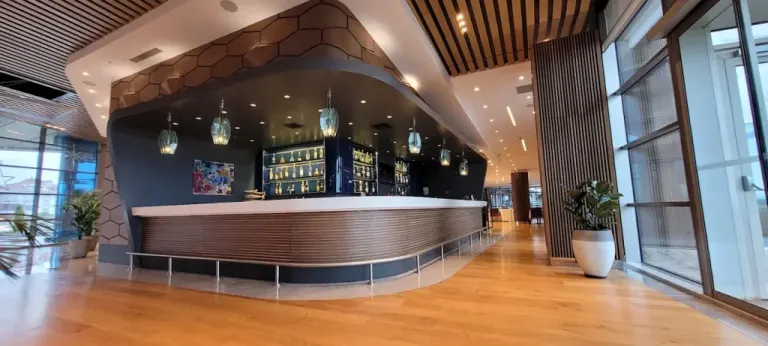
Five-axis CNC routing in Turkish joinery plants has popularized asymmetrical reeded timber paneling, scalloped stone plinths, and ribbed smoked-glass wardrobe doors. Beyond visual rhythm, fluted wood geometries scatter sound waves, naturally reducing guestroom and lobby reverberation without requiring visible industrial acoustic foam.
3. Modular "Bleisure" & Adaptive Guestroom Furniture Architectures
As remote executives and hybrid travelers extend stays across weekdays and weekends, Hotel Furniture Trends 2026–2027 Turkey center on fluid, reconfigurable room layouts that transition effortlessly from daytime workspace to evening social lounge.
Convertible Work-to-Dining Consoles & Cantilevered Pivot Tables
Traditional fixed wall desks facing blank drywall are rapidly disappearing. Turkish FF&E engineers are replacing them with height-adjustable cantilevered pivot tables and mobile C-shaped laptop pedestals on concealed low-profile castors. Guests can pull the work surface over a deep lounge sofa by day, then swivel it beside a banquette for in-room dining by night—supported by concealed 65W USB-C PD charging hubs integrated directly into sofa armrests.
Reconfigurable Modular Lounge Islands
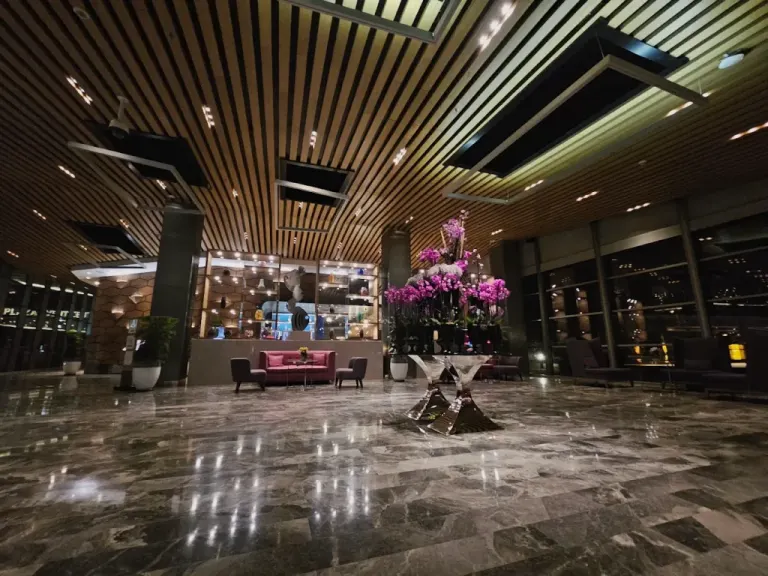
In lobbies, rooftop terraces, and executive suites, Hotel Furniture Trends 2026–2027 Turkey favor free-form serpentine modular seating islands featuring interchangeable backrests, magnetic bolster cushions, and plug-in side tables. Hotel operations teams can reconfigure lobby seating clusters in minutes to transition from morning co-working pods to evening cocktail reception layouts.
4. Curved Organic Silhouettes & "Quiet Luxury" Ergonomics
Sharp 90-degree corners are giving way to bullnose radius edges, kidney-shaped sofas, barrel-back lounge chairs, and monolithic drum coffee tables. Beyond softening interior sightlines, rounded furniture geometries serve a vital operational purpose in hospitality: curved edges eliminate corner chipping from housekeeping carts and rolling suitcases, dramatically extending casegoods lifespan while reducing guest impact injuries in compact rooms.
Multi-Density Cloud-Comfort Seating with Contract Recovery
To achieve residential "sink-in" luxury without sacrificing commercial resilience, Hotel Furniture Trends 2026–2027 Turkey upholstery studios layer 42 kg/m³ CMHR structural foam cores beneath channeled micro-denier down-alternative baffles and BS 5852 Crib 5 fire-retardant interliners—delivering plush comfort that rebounds cleanly without manual cushion plumping by housekeeping.
5. Circular Design, Digital Product Passports & Disassembly Engineering
Sustainability in 2026–2027 has shifted from marketing rhetoric to auditable engineering compliance. Forward-thinking Hotel Furniture Trends 2026–2027 Turkey manufacturers embed circular lifecycle principles directly into shop drawings:
1. Design for Disassembly (DfD): Replacing permanent staples and toxic solvent glues with precision threaded steel inserts, concealed cam-locks, and bolted sub-frames. When a hotel undergoes a 7-year Property Improvement Plan (PIP), damaged legs, tabletops, or seat decks are unbolted and swapped on-site rather than sending entire frames to landfill.
2. Zippered Slipcover & Modular Panel Upholstery: Lounge chairs and headboards feature concealed industrial zippers and Velcro channels, enabling rapid overnight re-upholstery using Bursa-milled 100% post-consumer recycled rPET fabrics.
3. QR-Embedded Digital Product Passports (DPPs): Aligned with emerging EU Ecodesign regulations, leading Turkish factories affix laser-engraved QR plates under every piece—linking hotel asset managers to exact timber FSC® origin certificates, foam density specs, fire-test reports, and spare-part reorder codes.
6. Invisible Smart Technology & Circadian Lighting Integration
In Hotel Furniture Trends 2026–2027 Turkey, guestroom technology becomes tactile and invisible rather than cluttered with plastic touchscreens:
• Thru-Surface Qi2 Wireless Charging: Inductive fast-charging coils are CNC-milled into the underside of solid oak nightstands and travertine side tables—marked only by a subtle laser-etched brass ring on top so guests charge phones seamlessly without cables.
• Circadian Indirect Cove Illumination: Headboards, floating vanities, and wardrobe plinths integrate tunable-white (2200K–4000K) CRI 95+ LED channels synchronized with the hotel’s Guestroom Management System (GRMS) to automatically shift from energizing daylight tones in the morning to melatonin-friendly warm amber glow at night.
7. How Procurement Teams Can Leverage Hotel Furniture Trends 2026–2027 Turkey
To capture these design innovations without inflating CAPEX or delaying project schedules, procurement directors and interior architects should apply three tactical guidelines:
• Engage Turkish Factory Engineers During Concept Design: Share preliminary mood boards early so factory CAD teams can recommend locally quarried Anatolian stones, stock veneer flitches, and modular frame geometries that achieve 2026–2027 design aesthetics within budget.
• Audit Physical Material Swatches Under Calibrated Lighting: Evaluate open-pore matte wood finishes, textured bouclés, and PVD bronze samples under 2700K evening hospitality lighting during the factory mock-up inspection to ensure tonal harmony.
• Lock EUDR & Fire-Safety Compliance in the BOQ: Specify FSC® Chain-of-Custody timber, EN 13501-1 B-s1, d0 substrates, and BS 5852 Crib 5 / NFPA 260 upholstery upfront to guarantee smooth international customs clearance and brand-standard sign-off.
This completes the seventeenth unique, technically deep article in your Hotel Furniture Turkey content series. Would you like me to compile the complete SEO metadata, JSON-LD schema markup, and internal linking architecture across all seventeen articles, or generate another specialized piece?