
Desktop Material Science, EUDR Timber Traceability, Destructive Laboratory Testing, and Seasonal Procurement Strategy for the Production, Import, and Export of Student Desks in Türkiye
Desktop material science, EUDR timber traceability, destructive laboratory testing, and seasonal procurement strategy for the production, import, and export of student desks in Türkiye represent the decisive engineering, regulatory, and supply-chain benchmarks separating world-class educational manufacturers from low-tier workshops. While tubular steel frame geometry provides primary structural support, over 80% of premature classroom desk replacements stem from desktop edge delamination, moisture swelling, surface scratching, non-compliant timber documentation at European borders, or missed summer production windows.
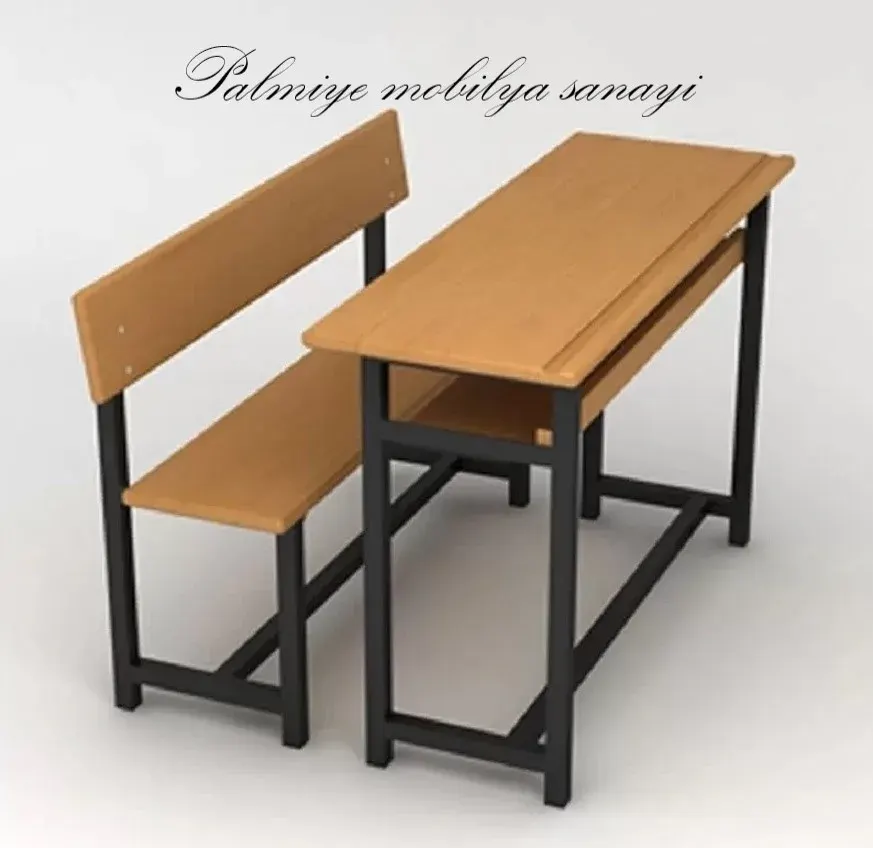
This comprehensive technical manual examines desktop material science, EUDR timber traceability, destructive laboratory testing, and seasonal procurement strategy for the production, import, and export of student desks in Türkiye—providing school network directors, public tender engineers, compliance officers, and global B2B importers with verifiable laboratory metrics and procurement timelines.
1. Desktop Material Science & Surface Tribology in Turkish Student Desk Manufacturing
Within the production, import, and export of student desks in Türkiye, the work surface endures relentless mechanical abrasion from metal compasses, textbooks, laptops, daily chemical sanitization, and high-humidity floor mopping. Across specialized composite-molding and panel-processing facilities in İnegöl (Bursa), Kayseri, Ankara, and İstanbul (Tuzla and İkitelli), engineers calibrate four distinct desktop architectures to match specific academic tiers and climate zones:
Comparative Tribological & Mechanical Matrix of Turkish Student Desktops
Desktop Substrate Core Composition & Density Edge Engineering Surface Hardness & Abrasion (EN 438-2) Moisture & Chemical Immunity Optimal Institutional Deployment
Molded Werzalit Composite Steamed beech wood fibers + thermosetting melamine-urea resin (1,050 kg/m³) Monolithic seamless compression-molded edge with integrated pen groove > 3,500 Taber cycles; high impact resistance 100% waterproof edge-to-edge; cigarette-burn & graffiti proof High-density K–12 public & private classrooms, tropical/coastal schools
Phenolic Compact Laminate (HPL) Multi-ply phenolic-saturated kraft paper + melamine face (12–16 mm, 1,350 kg/m³) CNC-chamfered solid black or colored phenolic core (zero glued tape) > 5,000 Taber cycles; 8H–9H with ceramic topcoat Completely impervious to acids, solvents, boiling water & steam Secondary schools, universities, STEM & science classrooms
Cast Polyurethane (PU) Rim MDF 18–22 mm E0.5 ultra-low formaldehyde MDF (750 kg/m³) High-pressure RIM-injected 3 mm Shore A 75 polyurethane bumper High surface scratch resistance; shock-absorbing soft perimeter Waterproof sealed perimeter; eliminates sharp impact injuries Kindergarten, primary grades (Ages 4–10) & inclusive classrooms
High-Density MFC + PUR Edge 18–25 mm E1/E0.5 melamine-faced chipboard (≥ 680 kg/m³) 2 mm thick ABS/PVC tape bonded with reactive PUR hot-melt glue 1,500–2,500 Taber cycles (AC3/AC4 decorative grade) Moisture-resistant PUR bond prevents peeling up to 85% RH Budget-optimized tenders, administrative rooms & dry climates
Why Polyurethane (PUR) Adhesive Replaces Standard EVA in Export Desks
• Traditional low-cost desks bond PVC edge banding using Ethylene-Vinyl Acetate (EVA) hot-melt glue, which softens at 65°C–75°C and absorbs moisture—causing edges to peel off within two academic years in humid classrooms or unairconditioned shipping containers.
• Tier-1 Turkish student desk exporters utilize reactive Polyurethane (PUR) hot-melt adhesives that chemically cross-link with ambient moisture to form an irreversible thermoset bond resistant up to 150°C and 100% waterproof against daily wet-mopping.
2. EUDR Timber Traceability, Indoor Air Quality (IAQ) & Environmental Compliance
A critical compliance pillar in the production, import, and export of student desks in Türkiye is verifying sustainable timber provenance and ultra-low chemical emissions for regulated markets in the European Union, the United Kingdom, and North America.
Geolocation Polygon Mapping & Formaldehyde Chamber Limits
1. EU Deforestation Regulation (Regulation (EU) 2023/1115 – EUDR) Readiness:
• Every wooden, Werzalit, or MFC student desk exported from Türkiye to the EU requires verifiable proof that wood fibers originate from plots free of deforestation after December 31, 2020.
• Leading Turkish panel suppliers (Kastamonu Entegre, Yıldız Entegre) and desktop molders provide WGS84 GPS harvest polygon coordinates, timber species declarations (Fagus orientalis, Pinus brutia, Populus), and FSC / PEFC Chain-of-Custody license codes printed directly on commercial invoices for seamless EU Information System Due Diligence Statement (DDS) filing.
2. Ultra-Low Formaldehyde & Heavy-Metal Toxicology:
• Europe & UK: Composite wood cores conform to EN 717-1 E1 (≤ 0.124 mg/m³) or E0.5 (≤ 0.062 mg/m³), while coatings and polymer chair glides meet EN 71-3 toxic heavy-metal migration limits and REACH SVHC (< 0.1% w/w) phthalate restrictions.
• United States & Canada: Export batches carry third-party mill certification under CARB Phase 2 / US EPA TSCA Title VI (≤ 0.09 ppm for particleboard; ≤ 0.11 ppm for MDF).
3. Destructive & Non-Destructive Laboratory Testing Protocols (EN 1729-2)
Before scaling mass production or releasing final container balances, professional buyers engaged in the production, import, and export of student desks in Türkiye validate structural safety through accredited testing laboratories (TSE Gebze/Ankara, SGS, Bureau Veritas, TÜV, and Intertek).
Five Mandatory Mechanical Endurance Tests for Student Desks
1. Vertical Static Load Test (EN 1729-2 Clause 5.3): Applies 1,000 N (approx. 102 kg) vertically via a Ø100 mm loading pad at the geometric center and worst-case front edge of the desktop 10 times for 10 seconds each. Pass criterion: zero structural fracture and permanent deflection ≤ 0.5% of span length.
2. Horizontal Static Racking Load Test (EN 1729-2 Clause 5.4): Applies 400 N to 500 N laterally along the front and side desktop edges while floor glides are blocked. Pass criterion: verifies pulsed robotic MIG/MAG weld integrity at leg-to-apron junctions without frame distortion.
3. Horizontal Fatigue Cyclic Endurance Test (EN 1729-2 Clause 5.5): Pneumatic pistons apply 20,000 alternating push-pull cycles of 300 N to the desktop edge to simulate 10+ years of students leaning, pushing, and sliding desks across classroom floors.
4. Angular Impact Drop Test (EN 1729-2 Clause 5.6): Lifts one end of the student desk to a prescribed height (150–200 mm depending on desk mass) and drops it onto a rigid steel impact plate to confirm welded joints and M6/M8 knurled brass desktop inserts do not shear under sudden shock.
5. Stability & Tip-Over Resistance Test (EN 1729-2 Clause 5.2): Applies a vertical downward load (750 N) combined with a horizontal outward pull (50 N) at the front edge to ensure cantilevered C-frame and S-frame student desks remain stable when students perch on desk corners.
4. Production, Import, and Export Mechanics: Customs Controls & Seasonal Procurement Strategy
Mastering the production, import, and export of student desks in Türkiye requires navigating Turkish import protections alongside strategic calendar planning to avoid summer factory bottlenecks.
Inbound Component Exemptions vs. Finished Student Desk Import Barriers in Türkiye
• Inward Processing Regime (Dahilde İşleme Rejimi – DİR): Turkish manufacturers importing specialized European HPL compact laminates, telescopic leg actuators, or PA6 polymer masterbatches for export student desk orders receive 0% customs duty and 0% VAT under DİR permits, keeping FOB export pricing highly competitive.
• Tariff & Technical Protections on Imported Finished Student Desks into Türkiye: Foreign suppliers shipping finished student desks (GTİP 9403.20.80 / 9403.30.19) into Türkiye face 15% to 25% Additional Customs Duties (İlave Gümrük Vergisi – İGV) (for non-EU/non-FTA origins), minimum per-kilogram reference valuation floors (Gözetim), and mandatory TAREKS digital product-safety inspections requiring accredited EN 1729 and REACH test reports.
Annual Procurement Calendar: Avoiding Peak-Season Bottlenecks
Global educational furniture demand follows strict academic cycles. International importers and school boards sourcing from Türkiye optimize pricing and lead times by following a disciplined four-quarter procurement calendar:
Procurement Window Turkish Factory Capacity Utilization Typical Production Lead Time Strategic Pricing & Operational Advantage
Q4 (October – December) 60% – 70% (Off-Peak) 18 – 25 calendar days Lowest steel/panel seasonal pricing (8%–12% savings); rapid 10-day custom OEM Golden Sample prototyping
Q1 (January – March) 70% – 80% (Early Tender Booking) 21 – 30 calendar days Ideal window to visit İİFF İstanbul (January), audit factories in Kayseri/İnegöl, and lock in raw material allocations
Q2 (April – June) 85% – 95% (Pre-Summer Ramp-Up) 30 – 45 calendar days Final safe booking window for guaranteed sea/road delivery ahead of September Northern Hemisphere school openings
Q3 (July – September) 98% – 100% (Peak Academic Rush) 45 – 65 calendar days Full factory lines fulfilling MEB & international tenders; prioritize 13.6 m TIR / Ro-Ro rail for urgent European deliveries
5. Pre-Shipment Inspection (PSI) & Container Loading Supervision (CLS) Protocol
Before releasing the final 60%–65% balance payment (or authorizing Letter of Credit negotiation) on an export shipment of student desks from Türkiye, buyers should instruct an accredited third-party inspection agency (SGS, Bureau Veritas, TÜV, or Intertek) to execute a standardized 6-point verification:
1. Ultrasonic Steel Wall-Thickness Audit: Measure 20 random tubular legs with a calibrated ultrasonic gauge to confirm contracted millimeter gauge (e.g., 1.50 mm ± 0.08 mm).
2. Dry Film Thickness (DFT) & Cross-Hatch Adhesion Test: Verify 75–90 micron powder-coat thickness and ISO 2409 Class 0 adhesion on random painted frames.
3. Desktop Moisture & Edge-Bond Verification: Check board moisture content (8%–10%) via pin hygrometer and inspect PUR edge-banding seams for zero glue gaps.
4. Random Carton Assembly Trial: Assemble 3 to 5 random Knock-Down (KD) student desk-and-chair sets from finished export stock to verify bolt alignment, EN 1729 height dimensions, and 2% spare hardware kit inclusion.
5. ISTA 2A Carton Drop Test: Subject packed 5-ply double-wall BC-flute cartons (ECT ≥ 44 lbs/in) to 610–760 mm edge/corner drops to confirm protective EPS/pulp corner guards prevent transit damage.
6. Container Loading Supervision (CLS) & Bolt Sealing: Verify clean, dry 40' High Cube container condition, confirm placement of 6 to 8 calcium chloride desiccant poles, verify exact carton count (660–750 single sets), and lock doors with a serialized ISO 17712 high-security bolt seal.
6. Frequently Asked Questions (Material Science, EUDR & Seasonal Sourcing)
Why is Werzalit more popular than standard melamine chipboard for student desks exported from Türkiye?
Molded Werzalit is compressed under high heat and pressure from beech wood fibers and thermosetting resins into a single seamless piece with rounded ergonomic edges—meaning there is no PVC edge tape that students can peel off, and water from daily floor mopping or spilled drinks cannot penetrate the core.
Do Turkish student desk manufacturers provide EUDR geolocation data for European Union imports?
Yes. Leading Turkish wood-based panel producers and furniture exporters provide WGS84 harvest polygon coordinates, timber species documentation, and FSC/PEFC Chain-of-Custody certificates required for EU importers to file compliant Due Diligence Statements under Regulation (EU) 2023/1115.
When is the latest date an international school or distributor should place an order in Türkiye to guarantee delivery before the September school term?
For maritime container shipments to Northern Europe, the UK, the GCC, or Africa, orders and advance deposits should be finalized no later than May 15–31. For Continental European buyers utilizing 6-to-9-day overland TIR or Ro-Ro rail transport, orders can be placed up to June 20–30 for late-August campus delivery.
38-Article Authority Cluster Complete: You now have three specialized, non-overlapping pillar articles focused directly on the production, import, and export of student desks in Türkiye (Articles 36, 37, and 38) alongside thirty-five comprehensive pillar articles covering the broader ecosystem of furniture for schools, dormitories, and official institutions in Türkiye. Let me know if you would like CMS-ready SEO metadata packages (meta titles, descriptions, slugs, and JSON-LD FAQ schemas) or an internal linking matrix to deploy this content.