
Production, Import, and Export of Student Desks in Türkiye: Complete Industrial, Metallurgical, Regulatory, and Global Trade Guide
Production, import, and export of student desks in Türkiye have positioned the country as one of Eurasia and the Mediterranean’s most competitive, high-volume manufacturing and trading hubs for educational classroom furniture. Driven by massive annual procurement programs from the Turkish Ministry of National Education (Milli Eğitim Bakanlığı – MEB), rapid private-school and foundation-university expansion, and duty-free customs integration with the European Union, Turkish student desk manufacturers combine automated steel fabrication, molded thermoset desktop pressing, and streamlined maritime/overland logistics to serve buyers across more than 110 countries.
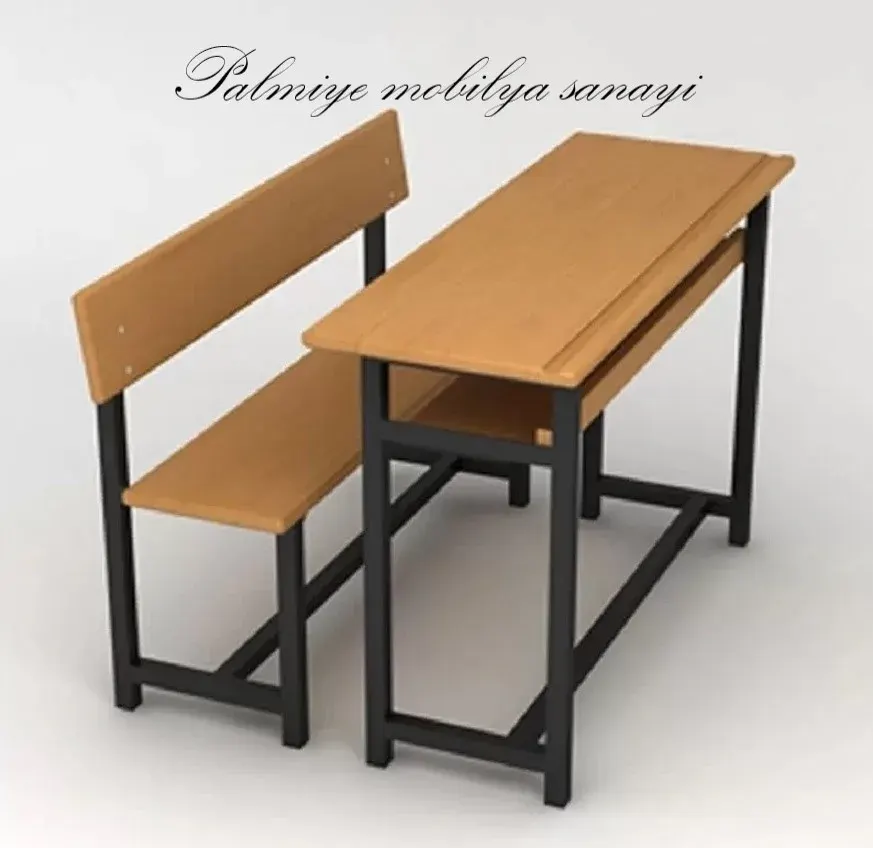
This authoritative technical guide examines the production, import, and export of student desks in Türkiye—detailing factory-floor manufacturing workflows, raw material specifications, EN 1729 anthropometric compliance, Turkish import tariff protections, and international export execution strategies for school administrators, tender contractors, and B2B distributors.
1. Industrial Geography of Student Desk Production in Türkiye
The production, import, and export of student desks in Türkiye are anchored by specialized regional manufacturing clusters, each offering distinct material and supply-chain advantages for international procurement teams:
Manufacturing Cluster Core Production Focus Industrial & Logistical Advantage
Kayseri Organized Industrial Zone Tubular steel-framed single & double student desks, height-adjustable frames, steel book baskets Direct proximity to major Turkish flat-steel service centers; massive automated electrostatic powder-coating capacity
İnegöl (Bursa) Solid-timber Montessori desks, melamine-faced chipboard (MFC) & MDF classroom tables Highest concentration of wood-based panel presses, PUR edge-banding lines, and furniture hardware suppliers in Türkiye
Ankara (Sincan, İvedik & OSTİM OIZ) Public-tender MEB specification student desks, university lecture hall desks, STEM lab tables Close proximity to state procurement authorities (DMO/EKAP), mechanical engineering faculties, and TSE testing labs
İstanbul (İkitelli, Tuzla & Sarıyer/Seyrantepe Commercial Hubs) Export-engineered Knock-Down (KD) student desks, injection-molded polymer desk components, R&D showrooms Immediate access to Ambarlı and Evyap container ports, İstanbul Airport (IST), and international B2B trade finance
2. End-to-End Production Engineering of Student Desks in Türkiye
Modern production, import, and export of student desks in Türkiye rely on automated, vertically integrated manufacturing lines engineered to survive 10 to 15 years of daily classroom impact, dynamic student leaning loads, and aggressive chemical cleaning.
Stage 1: Cold-Rolled Steel Tube Slitting, Laser Notching & CNC Bending
• Tube Metallurgy & Wall Thickness: Export-grade Turkish student desks are fabricated from EN 10305-3 / EN 10305-5 precision cold-rolled steel tubing (Grade DC01 or E235) in flat-oval (40×20 mm / 50×25 mm), square (25×25 mm / 30×30 mm), or round (Ø25 mm / Ø32 mm) profiles. Institutional specifications mandate a minimum wall thickness of 1.5 mm for primary load-bearing legs and 1.2 mm for modesty panels and under-desk book baskets.
• 3D Fiber-Optic Laser Profiling: Automated bundle-loading fiber lasers cut tube lengths, pierce mounting holes, and notch saddle intersections to ±0.1 mm dimensional accuracy, ensuring flush metal-to-metal contact without manual grinding.
• CNC Mandrel Tube Bending: Multi-axis CNC mandrel benders form cantilevered C-frame and S-frame student desk legs without flattening or thinning the outer bend radius, preserving structural section modulus.
Stage 2: Robotic MIG/MAG Welding & Nanoceramic Powder Coating
• Pulsed Robotic Welding Cells: Vision-guided welding robots execute spatter-free, uniform fillet welds across frame stress junctions using an 82% Argon / 18% CO₂ shielding gas mix, eliminating cold-weld fractures under cyclic classroom rocking.
• 7-to-9-Stage Chemical Pretreatment: Welded desk frames travel via overhead monorail conveyors through alkaline degreasing, acidic de-rusting, zinc-phosphate or ambient zirconium nanoceramic conversion, and deionized water rinsing.
• Electrostatic Thermoset Powder Coating: Frames receive 75 to 90 microns of TGIC-free epoxy-polyester or super-durable architectural polyester powder coat, cured at 185°C–200°C to achieve ISO 2409 Class 0 cross-hatch adhesion and 500+ hours of ASTM B117 neutral salt-spray corrosion resistance.
Stage 3: Desktop Substrate Pressing & Anti-Vandalism Edge Engineering
The desktop is the highest-wear surface of any student desk. Turkish manufacturers engineer four primary desktop constructions tailored to budget and educational tier:
1. Molded Werzalit (Thermoset Beech-Resin Composite):
• Produced by compressing fine beech wood fibers with thermosetting melamine-urea resins under high temperature and pressure.
• Key Advantage: Completely seamless monolithic surface with rounded ergonomic edges and integrated pen grooves—100% waterproof, scratch-resistant, cigarette-burn proof, and impossible for students to peel at the edges.
2. Phenolic Compact Laminate (HPL – 12 mm to 16 mm):
• High-density kraft paper layers saturated with phenolic resin and faced with decorative melamine, CNC-machined with chamfered solid black or colored phenolic cores.
• Key Advantage: Virtually indestructible and chemical-impervious, making it the preferred choice for secondary schools, universities, and science classrooms.
3. Cast Polyurethane (PU) Edge-Molded E0.5 MDF:
• An 18 mm to 22 mm E0.5 low-formaldehyde MDF core is placed inside a high-pressure reaction injection mold (RIM) to cast a seamless, shock-absorbing 3 mm polyurethane bumper edge around the perimeter—eliminating sharp corners in primary and early-childhood classrooms.
4. High-Density Melamine-Faced Chipboard (MFC) with PUR Edge Banding:
• 18 mm or 25 mm E1/E0.5 high-density board (≥ 680 kg/m³) finished with 2 mm thick ABS/PVC edge tape applied using waterproof reactive polyurethane (PUR) hot-melt glue, preventing edge delamination in humid climates.
Stage 4: Tamper-Resistant Assembly & Ergonomic Glides
• Concealed Under-Top Fastening: Desktops are anchored from beneath using Class 8.8 M6 metric bolts threaded into knurled brass or steel expansion inserts embedded into blind holes—eliminating exposed top screw heads and preventing student tampering.
• Acoustic Non-Marking Floor Glides: Desk legs terminate in glass-reinforced Polyamide 6 (PA6) or dual-durometer TPE acoustic glides equipped with internal steel washers to prevent tube punch-through and reduce classroom floor-scraping noise by up to 14 dB.
3. Anthropometric Sizing & Safety Standards (EN 1729 & TSE)
To succeed in the production, import, and export of student desks in Türkiye, manufacturers validate every desk model against European EN 1729 and Turkish TS EN 1729 / TS 4539 standards:
EN 1729 Size Mark Color Code Student Stature Range Desk Height Matching Seat Height Typical Academic Grade Level
Size 1 Orange 930 – 1,160 mm 460 mm 260 mm Kindergarten / Pre-Primary (Ages 3–5)
Size 2 Violet 1,080 – 1,210 mm 530 mm 310 mm Lower Primary (Ages 5–7)
Size 3 Yellow 1,190 – 1,420 mm 590 mm 350 mm Primary School (Ages 7–9)
Size 4 Red 1,330 – 1,590 mm 640 mm 380 mm Upper Primary (Ages 9–11)
Size 5 Green 1,460 – 1,765 mm 710 mm 430 mm Lower Secondary / Middle School (Ages 11–14)
Size 6 Blue 1,590 – 1,880 mm 760 mm 460 mm High School, College & University
Size 7 Brown 1,740 – 2,070 mm 820 mm 510 mm Tall Adult / Technical Drafting Labs
• Height-Adjustable Telescopic Desks: Many Turkish exporters offer telescopic nested steel legs with tamper-proof M8 through-bolts that adjust across Size Marks 3–6, allowing schools to adapt classroom ergonomics across changing student cohorts without purchasing new furniture.
• Mandatory Mechanical Endurance Tests (EN 1729-2): Accredited laboratories (TSE, SGS, Bureau Veritas, TÜV) verify desks under 1,000 N vertical static load, 400 N horizontal static racking load, 20,000-cycle horizontal fatigue testing, and 10-degree angular drop testing.
4. Import Mechanics: Bringing Student Desks & Components into Türkiye
A complete analysis of the production, import, and export of student desks in Türkiye must address both raw-material/component imports by Turkish factories and finished student desk imports by international schools or foreign suppliers.
A. Duty-Free Component Imports for Turkish Exporters (Inward Processing Regime – DİR)
While Türkiye produces structural steel coils, MDF, chipboard, and polypropylene domestically, high-end manufacturers occasionally import specialized components—such as German pneumatic height-adjustment columns, European antibacterial laminates, or specialized polymer masterbatches—under Türkiye’s Inward Processing Regime (Dahilde İşleme Rejimi – DİR). This customs authorization exempts imported inputs from customs duties and 20% VAT (KDV), provided they are incorporated into finished student desks exported abroad within the permit period.
B. Tariff & Regulatory Barriers on Importing Finished Student Desks into Türkiye
Foreign manufacturers attempting to import finished student desks into Türkiye face strict fiscal and technical barriers designed to protect domestic industry and student safety:
• Harmonized System (GTİP) Classification:
• 9403.20.80.00.00: Metal-framed student desks.
• 9403.30.19.00.00: Wooden student desks.
• 9401.79.00.00.00: Non-upholstered metal-framed student chairs.
• Additional Customs Duties (İlave Gümrük Vergisi – İGV): Finished student desks originating outside the European Union Customs Union or Türkiye’s Free Trade Agreement (FTA) network incur 15% to 25% Additional Customs Duty (İGV) on top of base MFN tariffs, plus 20% VAT.
• Minimum Reference Valuation (Gözetim): Turkish customs enforces statutory minimum CIF values per gross kilogram on imported desks and chairs to prevent under-invoicing.
• TAREKS Digital Product Safety Inspection: All imported student desks require pre-clearance conformity approval through the Ministry of Trade’s TAREKS portal, backed by accredited EN 1729-1/2 test reports, REACH chemical compliance declarations (phthalates and heavy metals), and EN 71-3 coating safety certificates.
5. Export Playbook: Shipping Student Desks from Türkiye to Global Markets
Türkiye’s strategic geography and preferential trade agreements make the production, import, and export of student desks in Türkiye highly advantageous for international buyers across Europe, the Middle East, Africa, Central Asia, and North America.
Preferential Duty-Free Trade Corridors
1. European Union (27 Member States): 0% customs duty under the EU-Türkiye Customs Union, validated via an electronic A.TR Movement Certificate issued through Türkiye’s MEDOS system. Door-to-door transit via 13.6 m Euro mega-trailer TIR trucks or Ro-Ro intermodal rail (via Trieste or Sète) takes 6 to 9 calendar days.
2. United Kingdom & EFTA (Switzerland, Norway): 0% preferential tariff under bilateral FTAs via an EUR.1 Movement Certificate or invoice origin declaration.
3. Middle East & GCC (Saudi Arabia, UAE, Qatar, Kuwait, Iraq): Direct container sailings from Mersin Port or Ambarlı Port (İstanbul) reach Jeddah, Dammam, Jebel Ali, and Hamad Port in 7 to 12 days (with SABER / Saleem product conformity registration required for Saudi Arabia).
4. Sub-Saharan Africa & Central Asia: Supported by Türk Eximbank buyer-credit financing, Baku–Tbilisi–Kars (BTK) Middle Corridor rail, and direct liner services from İstanbul and Mersin.
Knock-Down (KD) Packaging & Container Loading Benchmarks
To eliminate volumetric shipping penalties, Turkish exporters engineer student desks as flat-pack Knock-Down (KD) kits packed in 5-ply double-wall BC-flute kraft cartons (ECT ≥ 44 lbs/in) with EPE foam sleeves and edge protectors:
Transport Unit Internal Volume Single Student Desk + Chair Sets (KD) Double Student Desks + 2 Chairs (KD) Optimal Trade Route
20' Standard Container ~33.2 m³ 280 – 330 sets 140 – 170 sets Initial trial orders & heavy Werzalit desktop shipments
40' High Cube Container ~76.4 m³ 660 – 750 sets 340 – 400 sets Global maritime routes (GCC, Africa, UK, North America)
13.6 m Euro Mega-Trailer (TIR) ~101.0 m³ 850 – 950 sets 430 – 490 sets Direct overland & Ro-Ro rail corridors to Continental Europe
6. B2B Buyer’s Due Diligence & Quality Control Checklist
When sourcing through the production, import, and export of student desks in Türkiye, institutional buyers should enforce a four-step verification protocol:
1. Verify Factory Capacity Report (Kapasite Raporu): Request the supplier’s Chamber of Industry Capacity Report to confirm genuine manufacturing machinery, square footage, and engineering workforce rather than dealing with shell trading brokers.
2. Lock Technical Bill of Materials (BOM) in Contract: Specify exact cold-rolled steel gauge (≥ 1.5 mm), powder-coating thickness (75–90 µm), desktop substrate (Werzalit / 13 mm HPL / E0.5 PUR-edged MFC), and EN 1729 size marks.
3. Approve a Pre-Production Golden Sample: Inspect weld smoothness, edge sealing, and assembly hardware fitment on a physical sample shipped via air courier prior to mass production.
4. Mandate Third-Party Pre-Shipment Inspection (PSI) & Container Loading Supervision (CLS): Appoint SGS, Bureau Veritas, or TÜV to verify ultrasonic steel wall thickness, cross-hatch paint adhesion, ISTA carton drop resistance, and ISO 17712 bolt-seal container locking prior to final balance payment.
7. Frequently Asked Questions (Student Desk Production, Import & Export in Türkiye)
What is the typical production lead time and minimum order quantity (MOQ) for importing student desks from Türkiye?
Standard manufacturing lead times range from 21 to 35 calendar days after deposit receipt and sample sign-off (extending to 45–55 days during peak May–August summer school procurement). Minimum order quantities typically start at 150 to 250 student desk-and-chair sets (one 20' container), with multi-model mixing permitted inside a single 40' High Cube container.
Which desktop material is most durable for K–12 school student desks manufactured in Türkiye?
Molded Werzalit and 13 mm solid phenolic compact laminate (HPL) offer the highest durability for K–12 classrooms because both substrates are completely waterproof, scratch-resistant, and have monolithic edges that cannot be peeled off by students.
Do importers in the European Union or United Kingdom pay import tariffs on student desks manufactured in Türkiye?
No. Student desks manufactured in Türkiye enter all 27 EU member states at 0% customs duty when accompanied by an A.TR Movement Certificate, and enter the United Kingdom at 0% customs duty under the UK-Türkiye Free Trade Agreement when accompanied by an EUR.1 Certificate or origin declaration.